Fuse Rating Calculator
Calculate the correct fuse size for electrical safety
⚠️ Safety Guidelines
🛒 Shop Quality Fuses - UK Motor Factors

🔌 Standard Fuse Ratings
Understanding Fuse Ratings
What is a Fuse?
A fuse is a safety device that protects electrical circuits from damage caused by excessive current. It contains a metal wire or strip that melts when too much current flows through it, breaking the circuit and preventing fire, equipment damage, or injury.
Why Correct Fuse Sizing Matters
Undersized fuse: Blows frequently during normal operation, causing nuisance trips and inconvenience.
Oversized fuse: May not protect the circuit adequately. Wiring can overheat and cause fires before the fuse blows. This is extremely dangerous.
Correct fuse: Protects the circuit and equipment while allowing normal operation. The fuse should be rated at 125% of the continuous load, or match the wire's ampacity, whichever is lower.
Fuse Rating Calculation Formula
From Power: Current (A) = Power (W) ÷ Voltage (V)
Fuse Rating: Fuse = Current × Safety Factor (typically 1.25 to 2.0)
Example: 600W device on 12V system: 600W ÷ 12V = 50A. With 125% safety factor: 50A × 1.25 = 62.5A. Use next standard size: 80A fuse.
Safety Factors Explained
125% (1.25): Standard safety margin for resistive loads (heaters, lighting). Minimum recommended.
150% (1.5): Recommended for general use and electronic equipment. Provides good protection with minimal nuisance blowing.
200% (2.0): Required for inductive loads (motors, compressors) due to high inrush current on startup.
Common Fuse Types
Blade Fuses (Automotive):
- Mini Blade: 2-30A (most common in modern cars)
- Standard Blade: 3-40A (older vehicles, general use)
- Maxi Blade: 20-80A (high current automotive)
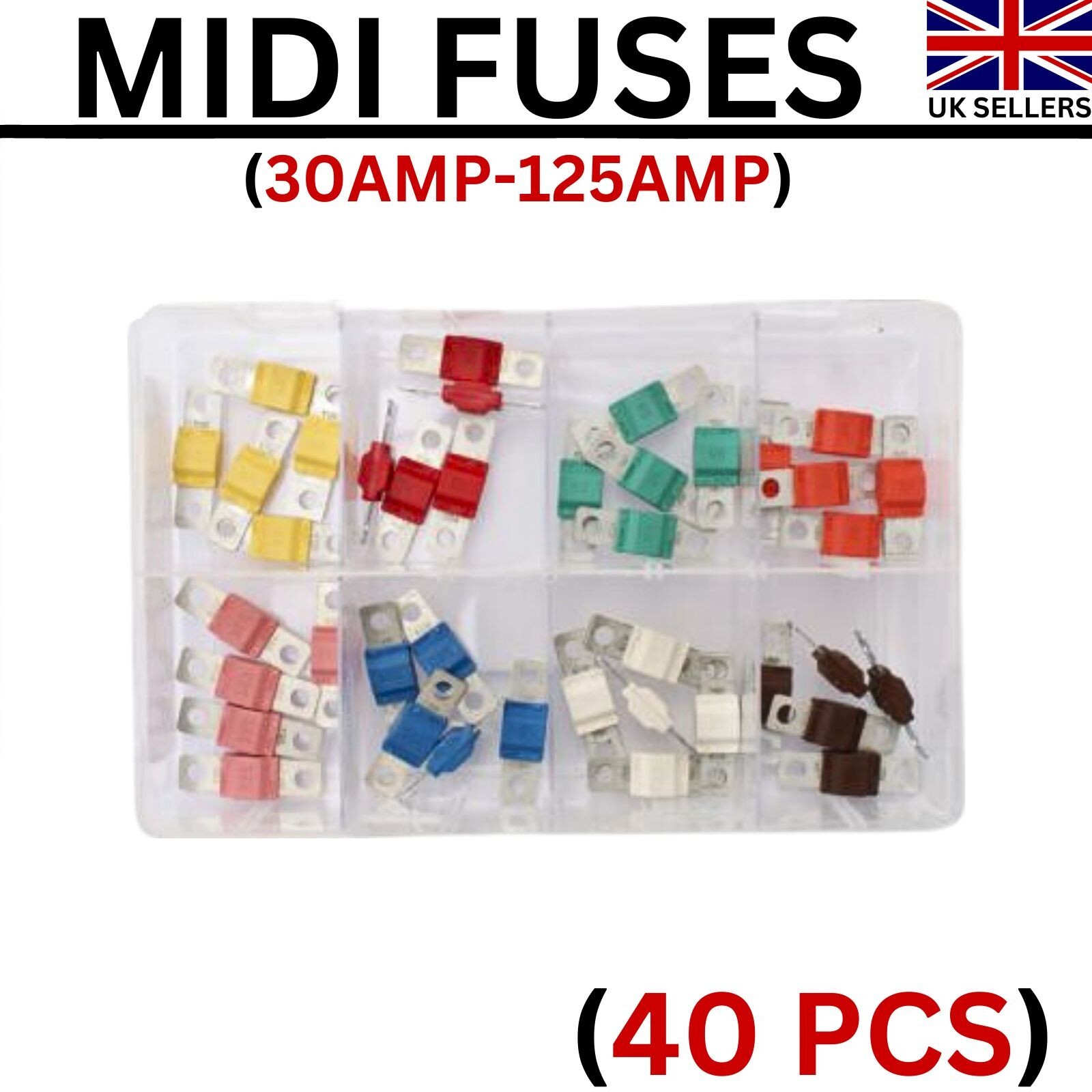
Midi Fuses:
- Range: 30A-150A
- Used for: High current circuits, battery feeds, alternator charging
- Common in: Trucks, commercial vehicles, aftermarket installations
Strip/Link Fuses:
- Range: 30A-300A+
- Bolted connections for very high current
- Main battery protection, inverters
Glass Tube Fuses:
- Range: 1A-30A typically
- Common in: Household electronics, audio equipment
- Fast-blow (F) or Slow-blow (T/SB)
Automotive Fuse Applications
- 5-10A: Interior lights, radio, clock, low power accessories
- 15-20A: Horn, cigarette lighter, heated mirrors, power windows
- 25-30A: Cooling fans, heated seats, high-power accessories
- 40-60A: Air conditioning compressor, large cooling fans
- 80-100A: Battery charging circuit, main power distribution
- 150A+: Alternator output, main battery feed, high-power inverters
Wire Gauge and Fuse Relationship
The fuse must never exceed the wire's current-carrying capacity (ampacity). Here are maximum fuse sizes for common wire gauges:
- 22 AWG (0.33mm²): Max 3A fuse
- 18 AWG (0.82mm²): Max 10A fuse
- 16 AWG (1.3mm²): Max 15A fuse
- 14 AWG (2.1mm²): Max 20A fuse
- 12 AWG (3.3mm²): Max 25A fuse
- 10 AWG (5.3mm²): Max 40A fuse
- 8 AWG (8.4mm²): Max 60A fuse
- 6 AWG (13mm²): Max 80A fuse
Fast-Blow vs Slow-Blow Fuses
Fast-Blow (F): Reacts quickly to overcurrent. Use for: sensitive electronics, circuits with no inrush current, protection of delicate equipment.
Slow-Blow (T/SB): Tolerates brief current surges. Use for: motors, transformers, capacitive loads, anything with high startup current.
When to Replace Fuses
- Fuse has blown (visual inspection shows broken element or darkened glass)
- Frequent nuisance blowing indicates undersized fuse or circuit fault
- Upgrading electrical equipment to higher power
- Installing new circuits or accessories
- Corrosion on fuse holder contacts
Critical Safety Rules
- NEVER use a higher rated fuse than calculated: This defeats the fuse's protective function
- NEVER bypass a fuse with wire or foil: Extremely dangerous - fire risk
- Always identify and fix the fault: If a fuse blows repeatedly, there's an underlying problem
- Use correct fuse type: Don't substitute fast-blow for slow-blow or vice versa
- Ensure fuse holder is rated adequately: Holder must support the current rating
- Check voltage rating: 32V fuses for automotive, higher ratings for mains